How to Choose the Right Dress for Your Body Type
Finding the perfect dress is not about chasing trends or copying what looks good on someone else. The secret to looking stylish and feeling confident is understanding how different dress styles work with your natural body shape. Every woman has unique proportions, and the right dress can highlight your best features while creating balance, comfort, and confidence.
Many women assume that only expensive fashion can look flattering, but that is not true. Affordable dresses can look just as elegant and polished when the fit, silhouette, and styling are chosen carefully. Understanding your body type makes shopping easier, reduces unnecessary purchases, and helps you build a wardrobe that truly works for your lifestyle.
Whether you prefer casual everyday outfits, office-ready looks, or more elegant styles, this guide will help you understand how to choose the right dress for your body type while keeping your wardrobe practical and affordable.
Why Body Shape Matters When Choosing Dresses
Body shape influences how clothing fits, drapes, and moves. Two women can wear the exact same dress size and still look completely different in the same outfit because proportions affect the overall silhouette more than the number on the label.
Understanding your body type allows you to:
- Choose dresses that feel more comfortable
- Create balanced and flattering outfits
- Avoid wasting money on styles that rarely get worn
- Build a wardrobe with more versatility
- Feel more confident in everyday fashion
The goal is not to hide your body or follow restrictive fashion rules. The purpose is simply to understand which styles naturally complement your shape.
Understanding the Most Common Body Types
Most women generally fall into one of several body shape categories. These are broad guidelines rather than strict definitions, and many women are a combination of different shapes.
Hourglass Body Shape
The hourglass body shape is typically characterized by balanced shoulders and hips with a clearly defined waist.
Common characteristics include:
- Curved silhouette
- Defined waistline
- Balanced upper and lower body proportions
Pear Body Shape
Pear-shaped bodies usually have wider hips and thighs with a narrower upper body.
Common characteristics include:
- Smaller shoulders
- Defined waist
- More volume around hips and legs
Apple Body Shape
Apple-shaped figures tend to carry more weight around the midsection while often having slimmer legs.
Common characteristics include:
- Less defined waist
- Fuller upper body
- Slimmer legs and hips
Rectangle Body Shape
Rectangle body types usually have similar measurements across the shoulders, waist, and hips.
Common characteristics include:
- Straighter silhouette
- Minimal waist definition
- Athletic or balanced frame
Inverted Triangle Body Shape
This body shape features broader shoulders with narrower hips.
Common characteristics include:
- Strong upper body
- Slim lower body
- Less volume around hips
How to Measure Yourself Properly
Before shopping for dresses, taking accurate measurements can make a major difference. Many sizing frustrations come from relying only on standard clothing sizes instead of actual body measurements.
Bust Measurement
Measure around the fullest part of your bust while wearing a comfortable bra.
Waist Measurement
Measure around the narrowest part of your waist, usually slightly above the belly button.
Hip Measurement
Measure around the widest part of your hips and hips area.
Keeping these measurements saved on your phone can make online shopping significantly easier.
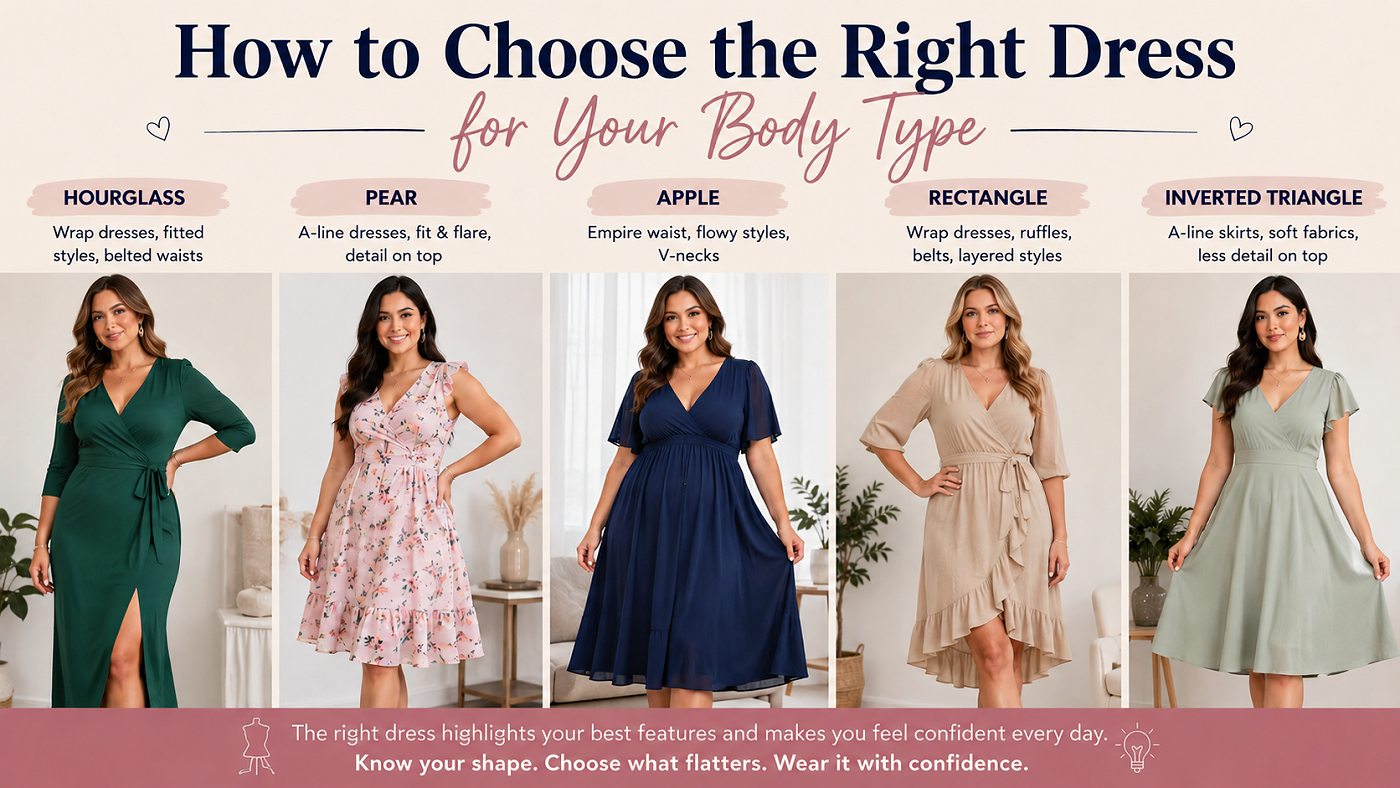
Best Dress Styles for Hourglass Body Types
Hourglass body shapes naturally have balanced proportions, so the goal is to highlight the waist while maintaining the body’s natural silhouette.
Wrap Dresses
Wrap dresses are one of the most flattering options for hourglass figures because they naturally define the waist while complementing curves.
Belted Dresses
Dresses with belts or waist definition enhance the balanced silhouette and create a polished look.
Bodycon and Fitted Styles
Well-fitted dresses can work beautifully for hourglass figures as long as the fabric feels comfortable and not overly restrictive.
What to Avoid
Oversized shapeless dresses may hide natural proportions and reduce balance.
Best Dress Styles for Pear Body Types
The pear body shape benefits from styles that create visual balance between the upper and lower body.
A-Line Dresses
A-line dresses gently skim over the hips without clinging too tightly, making them one of the best choices for pear-shaped figures.
Fit-and-Flare Dresses
These styles define the waist while adding movement and structure to the outfit.
Dresses with Detailed Necklines
Necklines, shoulder details, or subtle patterns on the upper body help draw attention upward.
What to Avoid
Very clingy fabrics around the hips may create imbalance instead of harmony.
Best Dress Styles for Apple Body Types
Apple-shaped figures often benefit from dresses that create soft structure and elongate the body.
Empire Waist Dresses
Empire waist dresses draw attention upward and create a flowing silhouette around the midsection.
Flowy Dresses
Relaxed fabrics and looser fits provide comfort while maintaining elegance.
V-Neck Styles
V-neck dresses help create vertical lines that visually elongate the upper body.
What to Avoid
Very tight waistlines or stiff fabrics around the stomach area may feel uncomfortable and visually restrictive.
Best Dress Styles for Rectangle Body Types
Rectangle body types often aim to create more definition around the waist and add movement to the silhouette.
Wrap Dresses
Wrap dresses naturally create waist definition and shape.
Ruffled or Layered Styles
Ruffles and layered fabrics add dimension and softness.
Fit-and-Flare Dresses
These styles create curves by adding volume below the waist.
What to Avoid
Very straight and boxy dresses without any waist definition may appear too flat.
Best Dress Styles for Inverted Triangle Body Types
The inverted triangle shape benefits from styles that soften the shoulders and add balance to the lower body.
A-Line Skirts and Dresses
Dresses with volume below the waist help create proportion and movement.
Simple Upper Body Designs
Minimal shoulder details help avoid emphasizing upper-body width.
Flowy Lower Silhouettes
Soft movement around the hips creates visual balance.
What to Avoid
Structured shoulders or heavy embellishments around the neckline may exaggerate upper-body proportions.
Universal Dress Styles That Work for Most Body Types
Some dress styles are extremely versatile and tend to flatter many different shapes.
Wrap Dresses
Wrap dresses remain one of the safest and most universally flattering choices because they adjust naturally to the body.
A-Line Dresses
A-line silhouettes create gentle balance and movement without clinging.
Midi Dresses
Midi lengths work well for both casual and semi-formal settings while remaining comfortable and practical.
Shirt Dresses
Shirt dresses offer structure without feeling overly formal and can be styled in multiple ways.
How Fabric Changes the Look of a Dress
Fabric plays a huge role in how flattering a dress appears.
Soft Fabrics
Soft fabrics drape naturally and create a more relaxed silhouette.
Structured Fabrics
Structured materials create shape and definition but may feel less forgiving.
Stretch Fabrics
A small amount of stretch improves comfort and flexibility, especially in affordable dresses.
Choosing the Right Dress Length
Dress length can completely change the overall appearance of an outfit.
Mini Dresses
Mini dresses create a youthful and casual look while highlighting the legs.
Midi Dresses
Midi dresses offer versatility and balance for everyday wear.
Maxi Dresses
Maxi dresses create a flowing, elongated silhouette that feels relaxed and elegant.
How Color and Patterns Affect Your Look
Color and print choices influence how proportions are perceived.
Darker Colors
Darker tones often create a slimming and streamlined effect.
Bright Colors and Patterns
Patterns naturally draw attention, making them useful for balancing proportions.
Vertical Lines
Vertical details can create the illusion of height and elongation.
Building a Dress Wardrobe That Works for Your Body Type
Once you understand what styles suit your shape, shopping becomes much easier and more intentional.
Start with Everyday Basics
Focus first on versatile dresses that can be styled for multiple occasions. If you are looking for practical everyday options, browse the latest affordable women dresses designed for comfort and style.
Add Seasonal Variety
Layer-friendly dresses, casual summer styles, and neutral basics help create a wardrobe that works year-round.
Prioritize Comfort
Confidence comes from comfort. A dress that feels good is far more likely to become a favorite.
Common Mistakes Women Make When Choosing Dresses
Following Trends Instead of Fit
Not every trend works for every body type, and that is completely normal.
Ignoring Fabric Quality
Even affordable dresses should feel comfortable and breathable.
Buying Dresses for “Someday”
Focus on clothing that fits your current lifestyle and body rather than unrealistic expectations.
Choosing the Wrong Size
A dress that fits properly almost always looks better than one that is too tight or too loose.
How Accessories Can Improve the Overall Look
Accessories help personalize and refine your outfit.
Belts
Belts create waist definition and structure.
Footwear
Shoes influence the overall tone of the outfit, from casual to elegant.
Layering Pieces
Blazers, jackets, and cardigans add versatility and allow dresses to transition between seasons.
Affordable Fashion Can Still Look Stylish
Style is not determined by price. The right fit, color, and silhouette matter far more than expensive labels. Affordable dresses can look polished, modern, and flattering when chosen thoughtfully.
By understanding your body type and learning how different styles work, you can build a wardrobe that feels effortless and practical without overspending.
Confidence Is the Most Important Element
Fashion should support confidence rather than create stress. The “perfect” dress is not about trends or rules — it is the one that makes you feel comfortable, balanced, and authentic.
Every body type can look stylish with the right approach. Experimenting with silhouettes, colors, and fabrics helps you discover what works best for your personality and lifestyle.
Finding Your Personal Style
Choosing the right dress for your body type is about understanding balance, comfort, and personal style. Once you know what silhouettes flatter your shape, shopping becomes easier and more enjoyable. Affordable fashion gives you the flexibility to experiment with different styles while building a wardrobe that truly works for your everyday life.
More Dress Styling Guides
- How to Style Cheap Women Dresses for Everyday Wear
- Cheap Women Dresses for Work and Casual Wear
- Midi vs Maxi Dresses: Which One Should You Choose?